
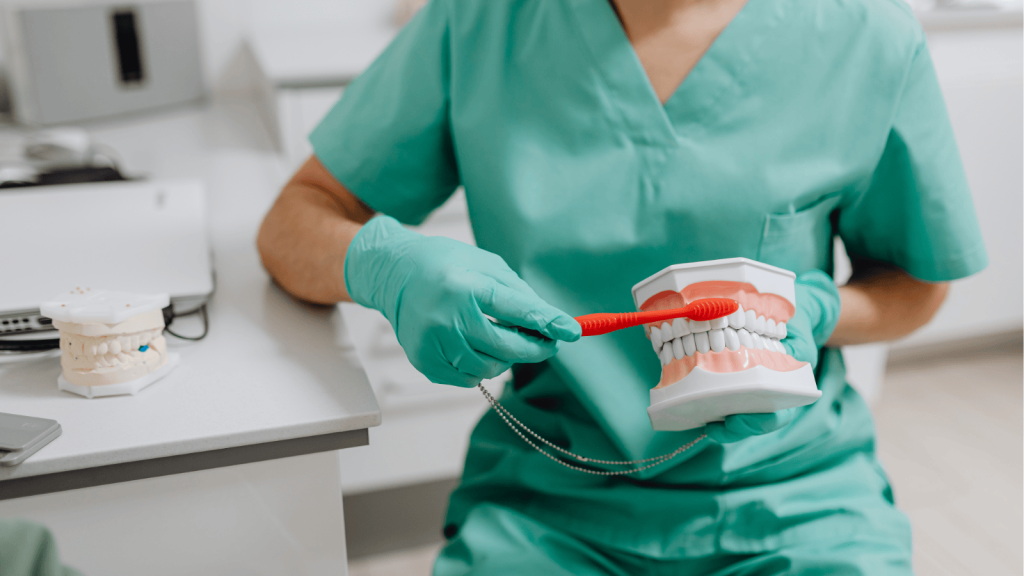
You brush your teeth every morning. Maybe even floss at night. But have you ever stopped and thought: what does that have to do with braces, aligners, or any orthodontic thing? It turns out quite a lot. Your mouth is like a mini ecosystem. If one part is off-balance. It ripples. Orthodontics isn’t just about straight teeth or a pretty smile. It deeply ties into your oral health, gum health, cavities, and even how long your teeth last. In this blog, we will cover how oral health affects orthodontic outcomes. We also learn about risks and complications when you don’t maintain your mouth during treatment. Tips to protect your oral health while you are in braces or using aligners.
Why a Healthy Mouth Matters Before Getting Braces or Aligners
Your baseline oral health sets the stage. If your gums are inflamed, you already have plaque, or you have untreated cavities, that’s a shaky foundation. Trying to move teeth through unhealthy tissue is like building on quicksand.
Also, orthodontic treatment takes months and maybe years. During that period, if your oral hygiene is weak, things like gum disease or decalcification can sneak in. One study found that after orthodontic treatment, visible dental plaque and white spot lesions increased significantly.
So, if you don’t start clean and stay clean, you risk undoing the benefit of a straight smile.
How Orthodontics Can Affect Oral Health
When you decide to go for braces or clear aligners, you change the environment in your mouth. Wires and attachments. They all create little nooks and crannies where food and bacteria hide. Risks and problems to watch out for:
- More plaque accumulation is harder to clean around brackets and wires.
- White spot lesions/decalcification start losing minerals around the edges. This can begin soon after treatment starts.
- Gum irritation or inflammation might swell or bleed if cleaning is poor.
- Root resorption is a less common but real risk. The roots of teeth can shorten a bit under stress.
- Longer treatment time or compromised results if teeth are fighting disease or infection, progress may stall.
On the flip side, when things go right, properly managed orthodontics can improve bite, make cleaning easier, help with chewing, and reduce uneven wear on teeth.
As your smile becomes more balanced, your self-confidence often improves, which encourages you to take better care of your teeth. It’s a positive cycle. Some quality-of-life studies find that after orthodontic treatment, patients report better oral health–related quality of life.
In one study, more than 70% of adults had “inadequate or marginal” knowledge about oral health or orthodontics.
How to Keep Your Smile Healthy
You have started your orthodontic journey, and there’s one big question: how do you keep everything clean and healthy while your teeth are shifting? It’s not just about brushing more. It’s about brushing smarter. Let’s go over a few small habits that make a big difference.
| Tip | How to do it |
| Upgrade your brushing technique | Use a soft toothbrush, aim for a 45° angle around wires/brackets. Electric brushes help. |
| Floss daily | Threaders, water flossers, interdental brushes. They are your friends. |
| Use a fluoride rinse or gel | Helps remineralize enamel, fights decay, especially in hard spots. |
| Watch sugary/sticky foods | Candy, soda, caramel. These are trouble. They linger. |
| Visit your dentist regularly | Cleanings every 3–4 months, check for early warning signs (white spots, gum issues). |
| Be gentle with your braces | Don’t chew ice, open packages with teeth, etc. |
Communicate with your orthodontist. If you see redness, pain, or weird spots. Say something early. It’s easier to correct small problems than big ones.
Smoother Smile, Healthier Mouth
It may seem odd. But yes, straightening teeth with good technique and monitoring can lead to better long-term oral health. Poorly aligned teeth create areas that are very hard to clean (overlaps, crowding). These are breeding grounds for plaque, cavities, and gum disease.
Once the teeth are aligned, cleaning becomes simpler, the gums stay healthier, and risks of localized bad wear decrease. So the link is two-way:
- Good oral health supports orthodontics.
- Smart orthodontics (with proper care) supports long-term oral health.
Final Thoughts
Oral health and orthodontics are co-pilots. You can’t do one well without considering the other. Starting with a clean mouth, maintaining discipline during treatment, and choosing an orthodontist who cares about your gums and enamel. Those are the ingredients for a smile that’s good-looking and lasts. If you are in Honolulu and thinking about braces or clear aligners, we highly suggest reaching out to Caswell Orthodontics. Ask us: “How do you protect my oral health during treatment?” We give you a plan you feel good about. Ready to talk? Drop us a message or book a consultion. Your future smile will thank you.
FAQs
Can orthodontic treatment worsen periodontal disease if the patient already has it?
Yes. If gum disease exists before treatment, shifting teeth can aggravate it. That’s why a periodontal evaluation first is important. If the disease is under control, treatment is safer.
How reversible are white spot lesions after braces?
If caught early, some remineralization can help. But deep white spots may leave lasting enamel changes. Prevention is much better.
Does aligner treatment carry less risk to oral health than traditional braces?
Generally, yes, because aligners are removable, you can maintain better hygiene. Some studies show that aligners lead to fewer enamel and gum issues during treatment. But it depends on discipline: if you take them off and drink soda all day, you are still vulnerable.